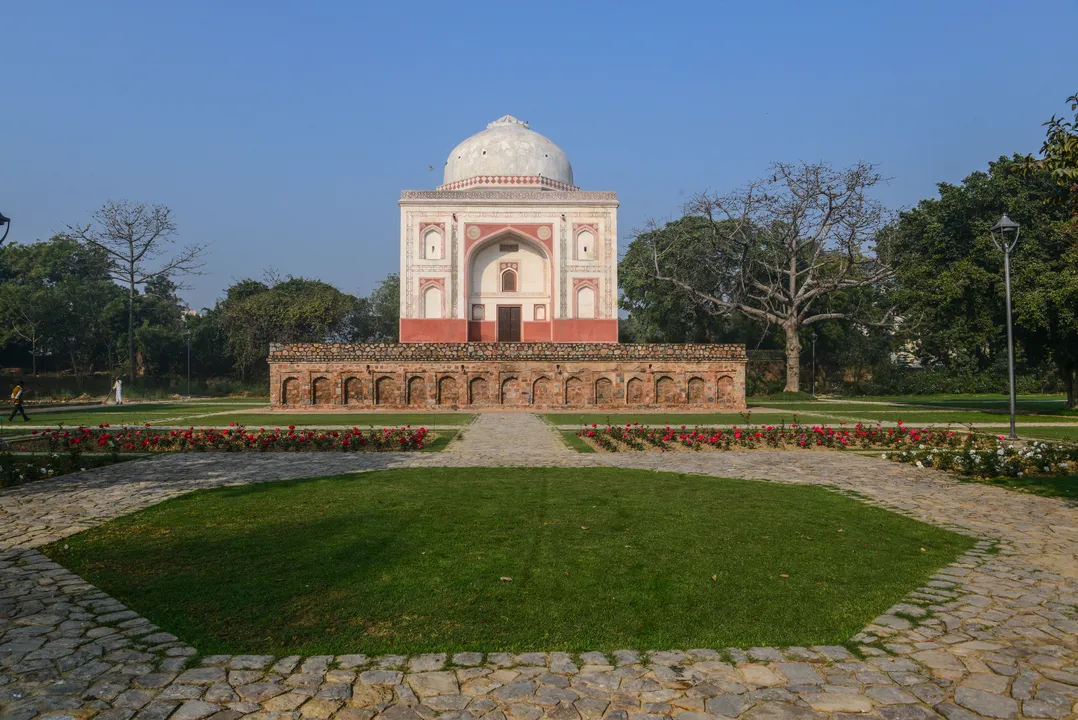
Conservation was carried out between 2010 and 2012, by the Aga Khan Trust for Culture with a grant
from the US Ambassadors Fund for Cultural Preservation.
Ceiling:
One of the most significant features of Sunder Burj is its highly ornamental star-patterned internal
ceiling, which suffered heavy damage due to water seepage and later repairs that used cement and
whitewashing. A team of highly trained craftspeople carefully scraped off these cement layers from
both the internal and external wall surfaces and cleaned the remaining portions of original
plasterwork.
Dome:
The cracks on the dome which led to water penetration, causing loss of decorative plasterwork on the
ceiling below, were stitched with lime mortar. Dome repairs included removing cement plaster and
replastering it with lime mortar along with cleaning and restoring missing portions of the interior
ceiling.
Interiors:
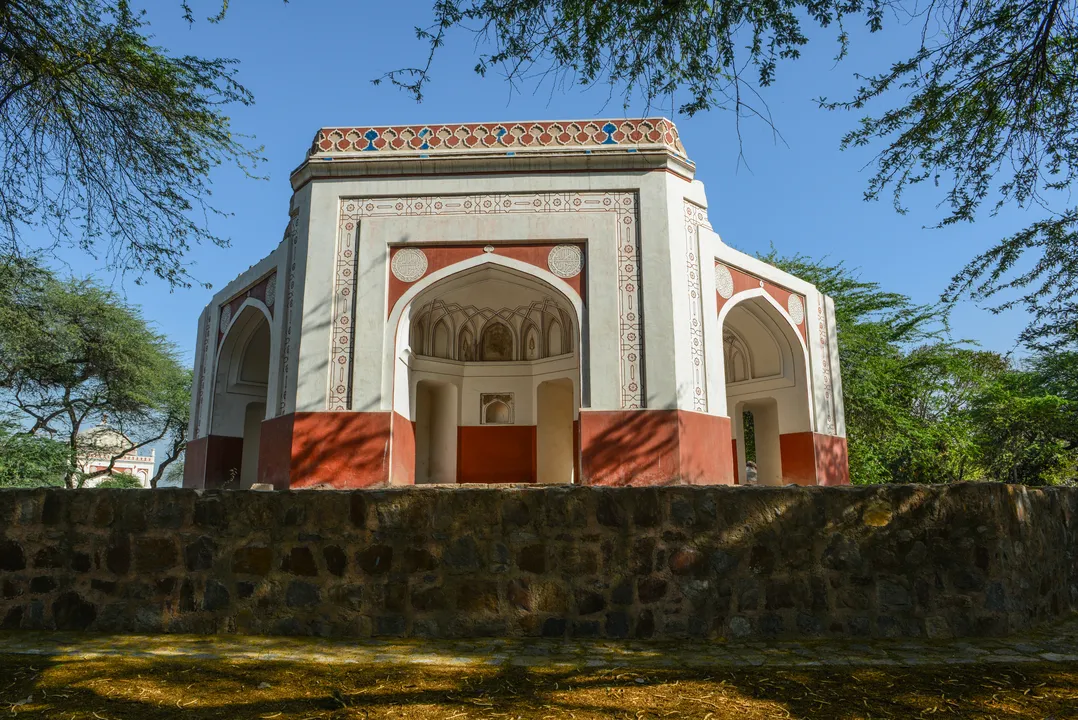
While cleaning the original wall surfaces on the external façade, the team discovered layers of
polychrome plaster underneath, and this was restored as per original designs. After the cement
plaster was removed, the façade and interiors were lime plastered and finished with a layer of lime
punning using matured lime putty mixed with traditional additives and marble. The Quranic
inscription on the lintel level inside the monument was carefully restored in matching calligraphic
style that was approved by scholars. The cement concrete flooring was replaced with red sandstone
that was hand-chiselled and fixed with lime mortar after the base layer was consolidated.
Wooden doors have also been installed in the four openings.
The four arched openings over the doorways whose sandstone lattice screens were missing when the work
began, were closed with hand-crafted sandstone lattice screens, which are an integral part of the
building.

.webp)

.webp)
.webp)
.webp)

.webp)


.webp)
.webp)
.webp)
.webp)
.webp)