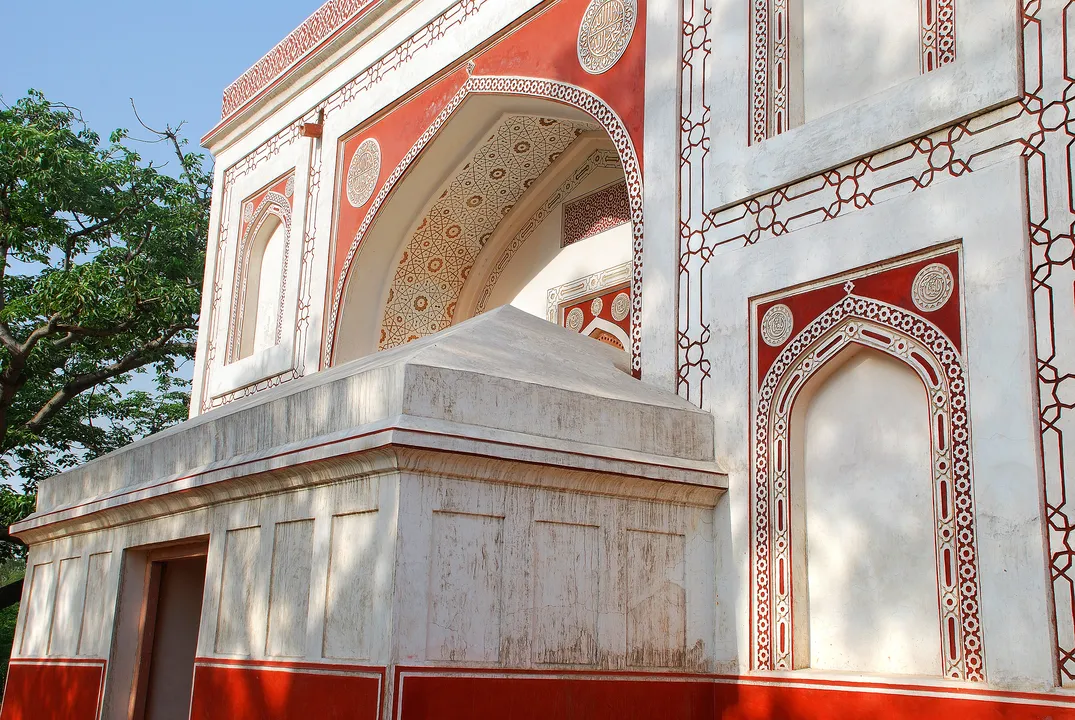
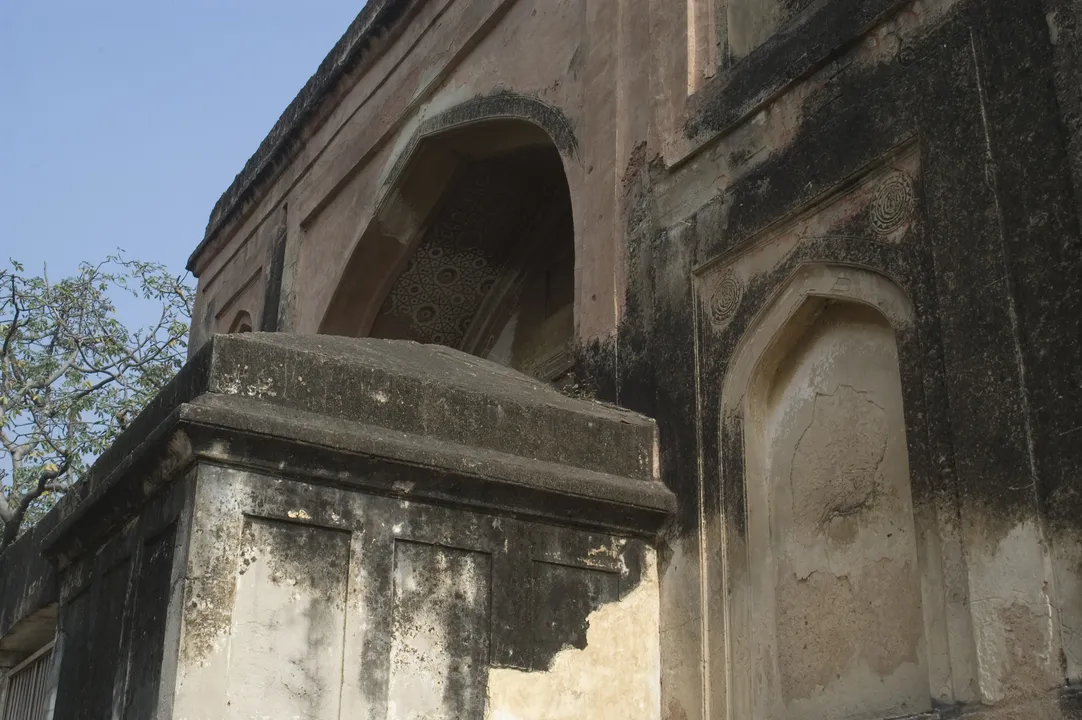
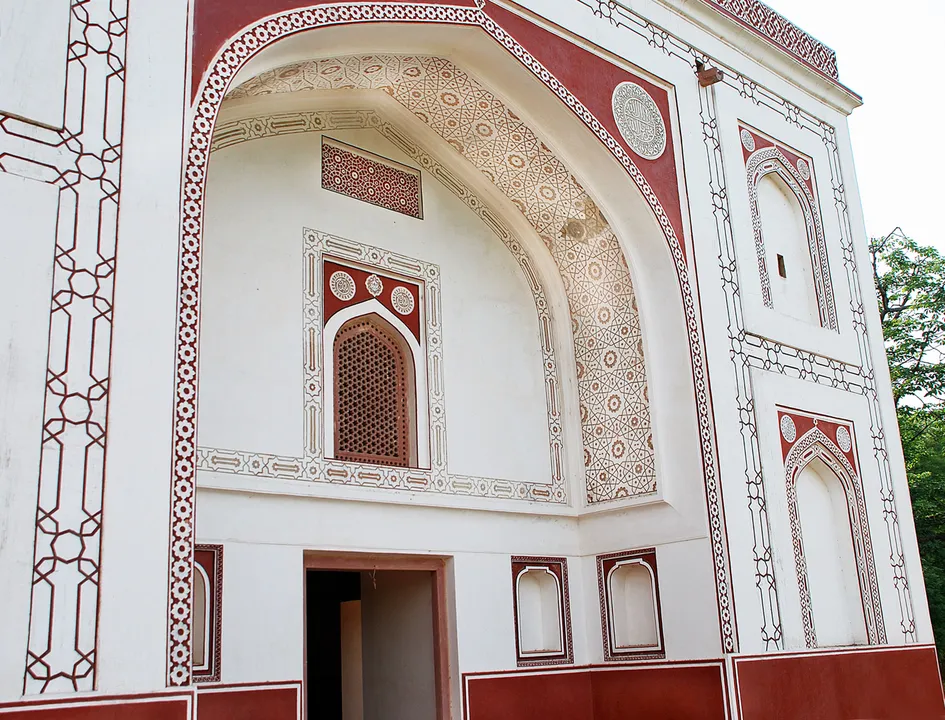
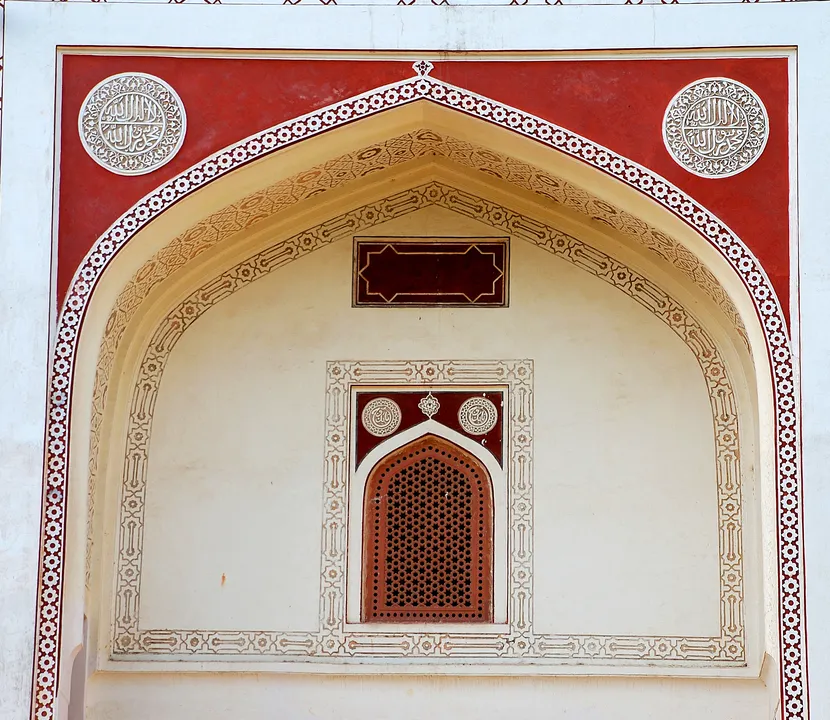
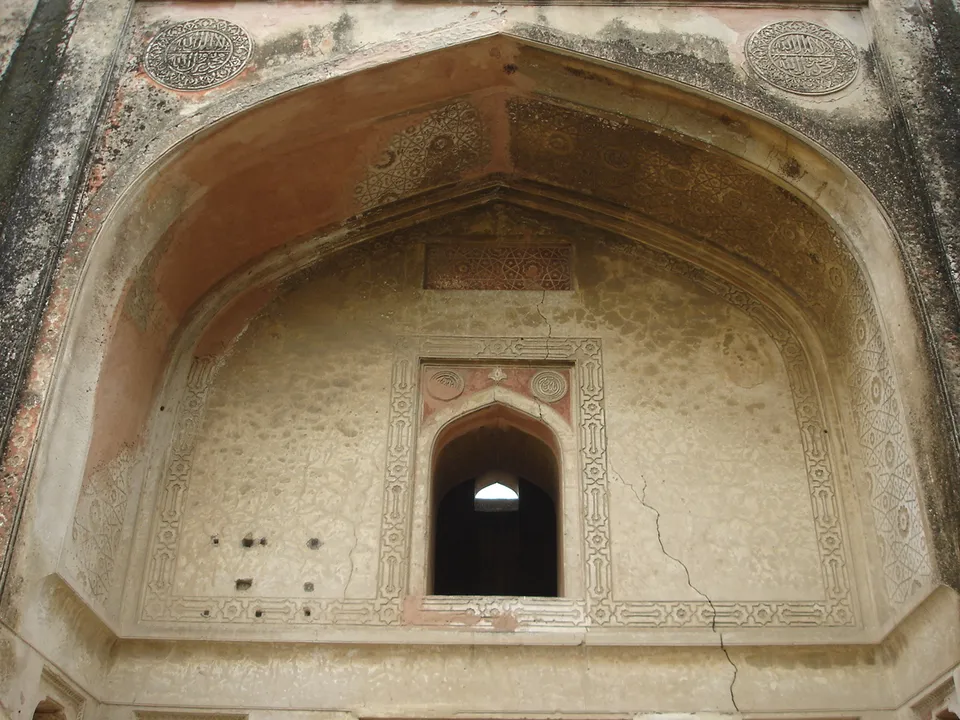
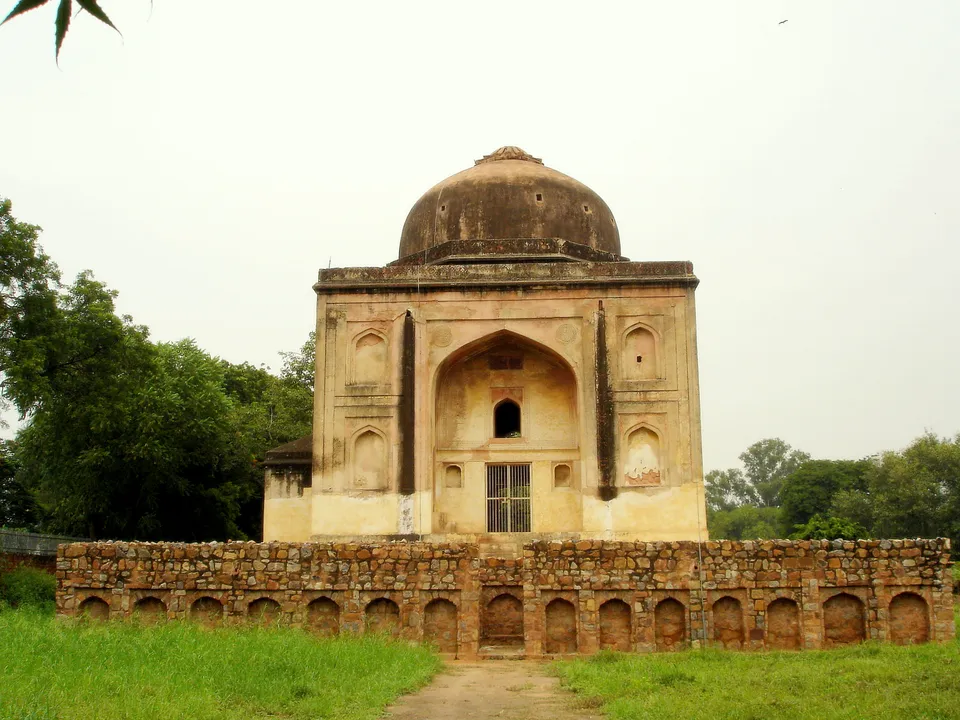
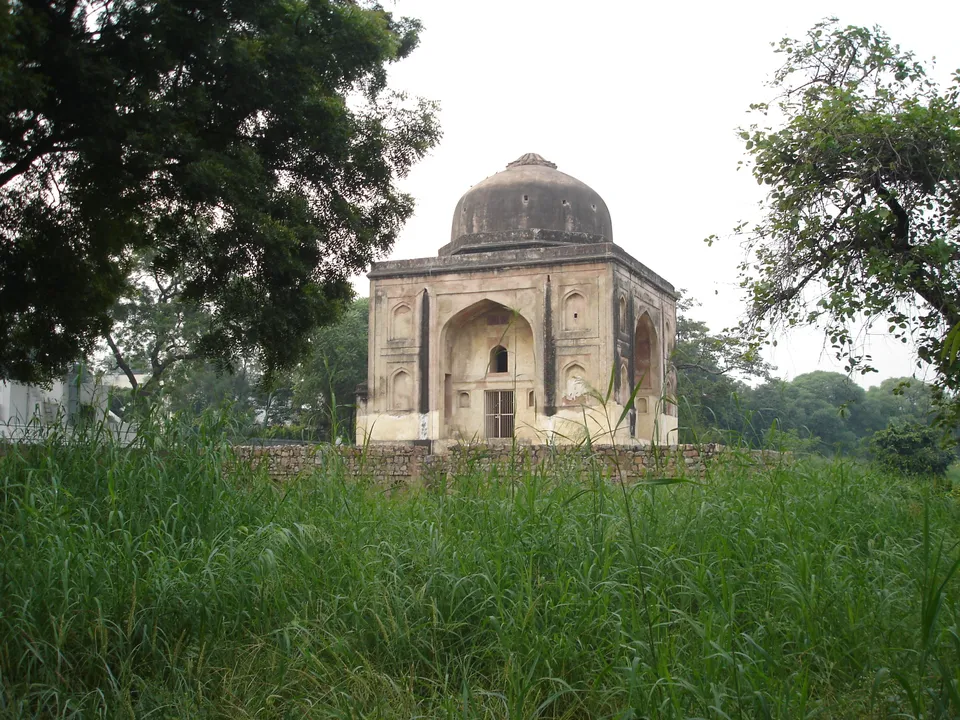
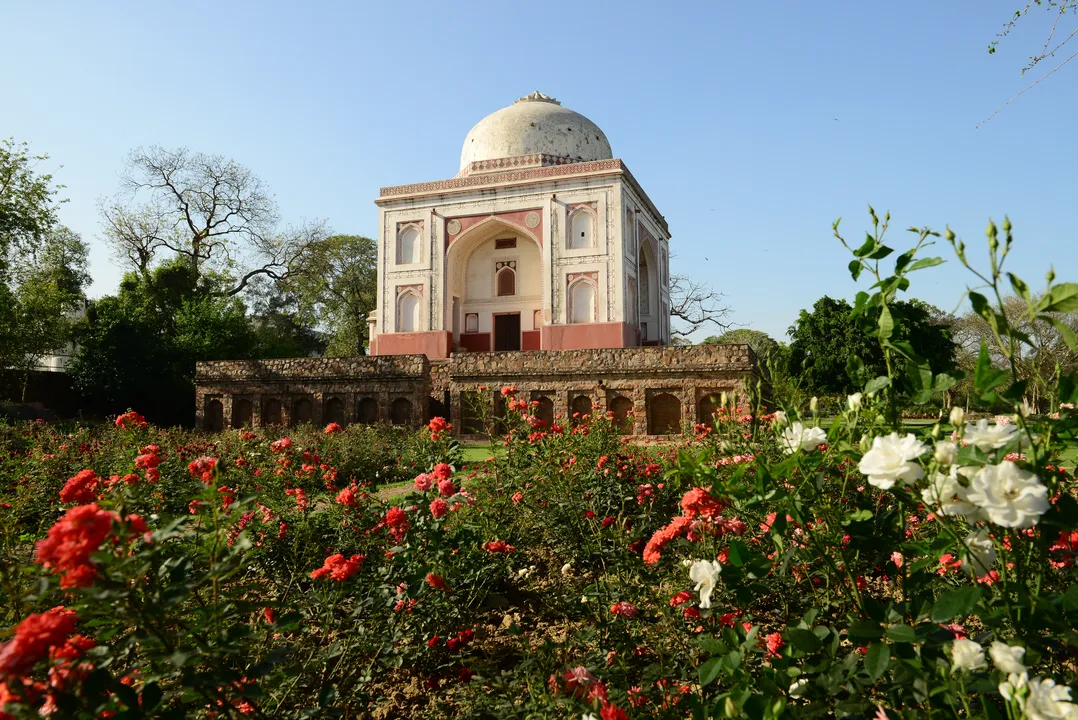
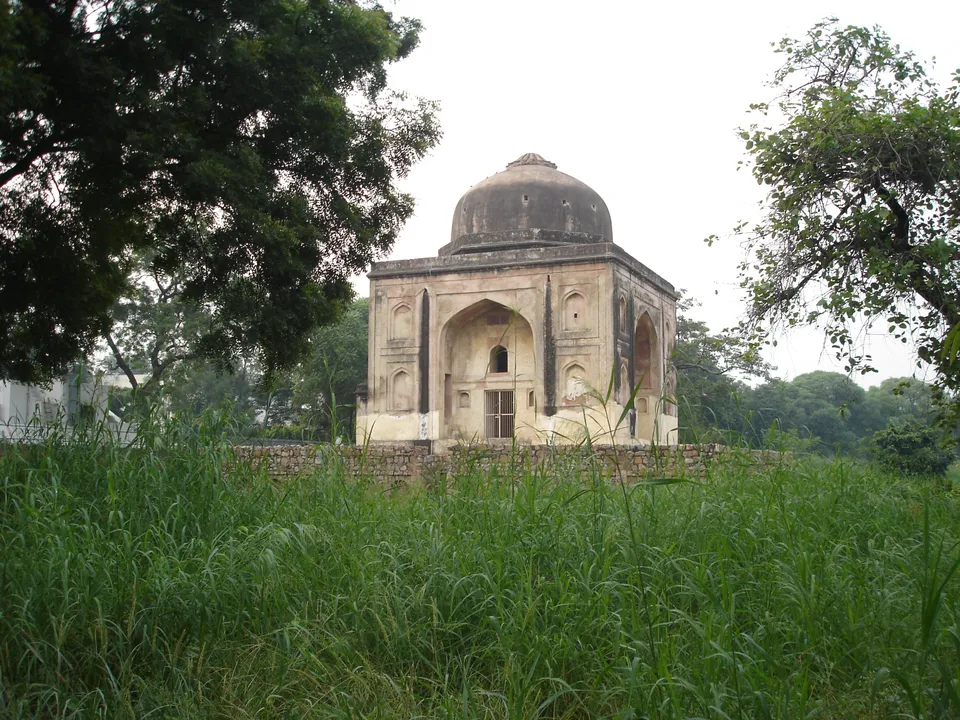
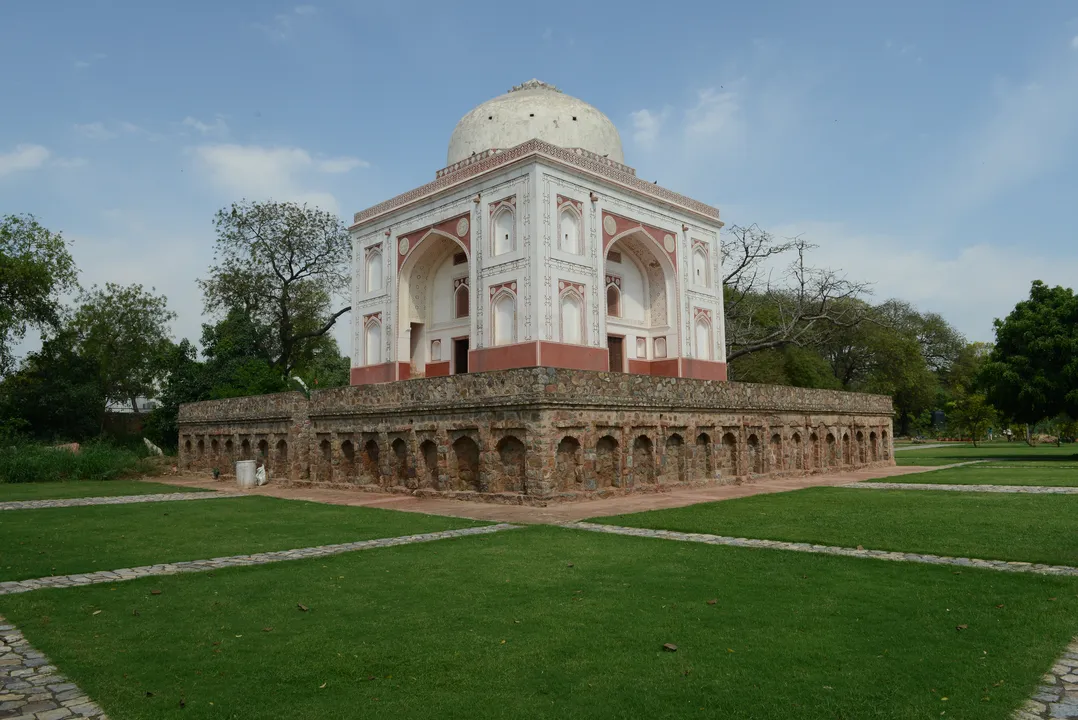
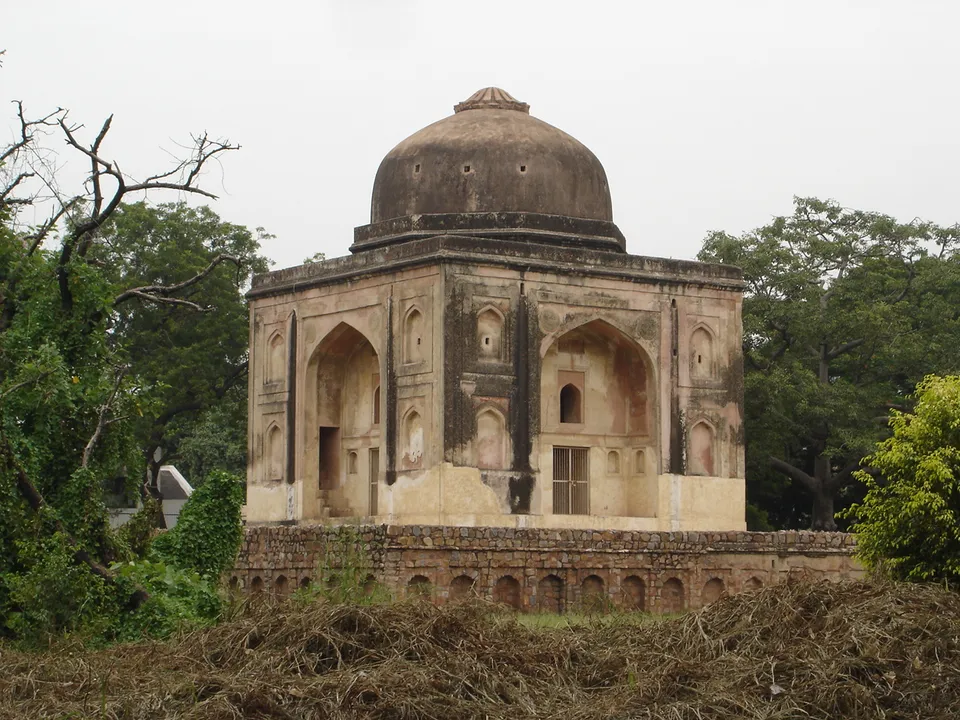
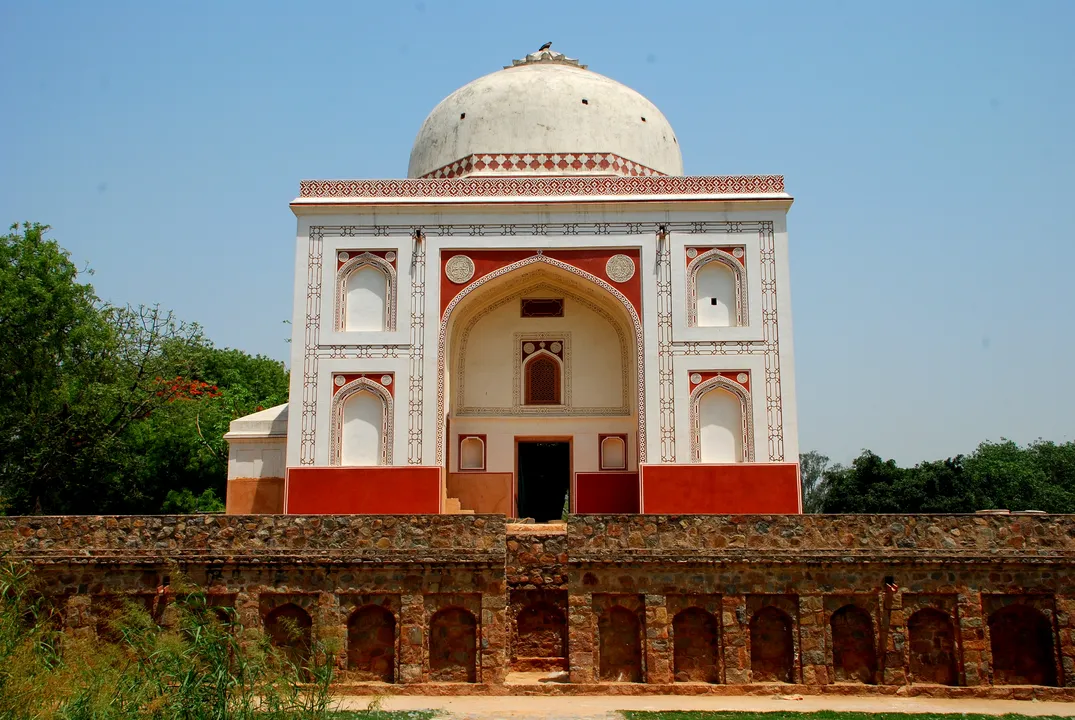
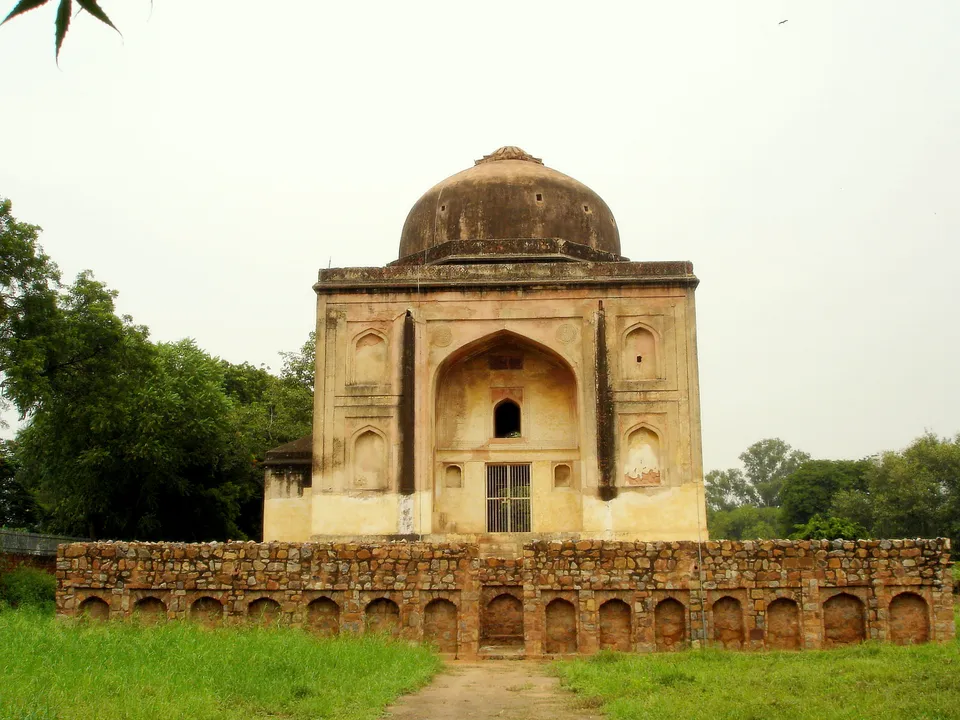
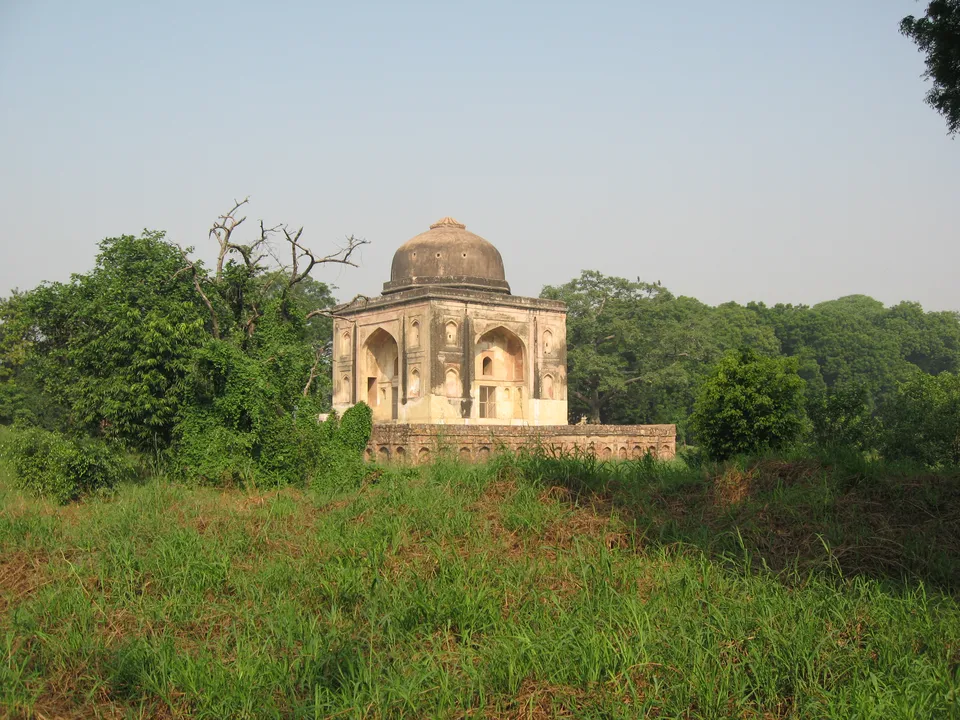
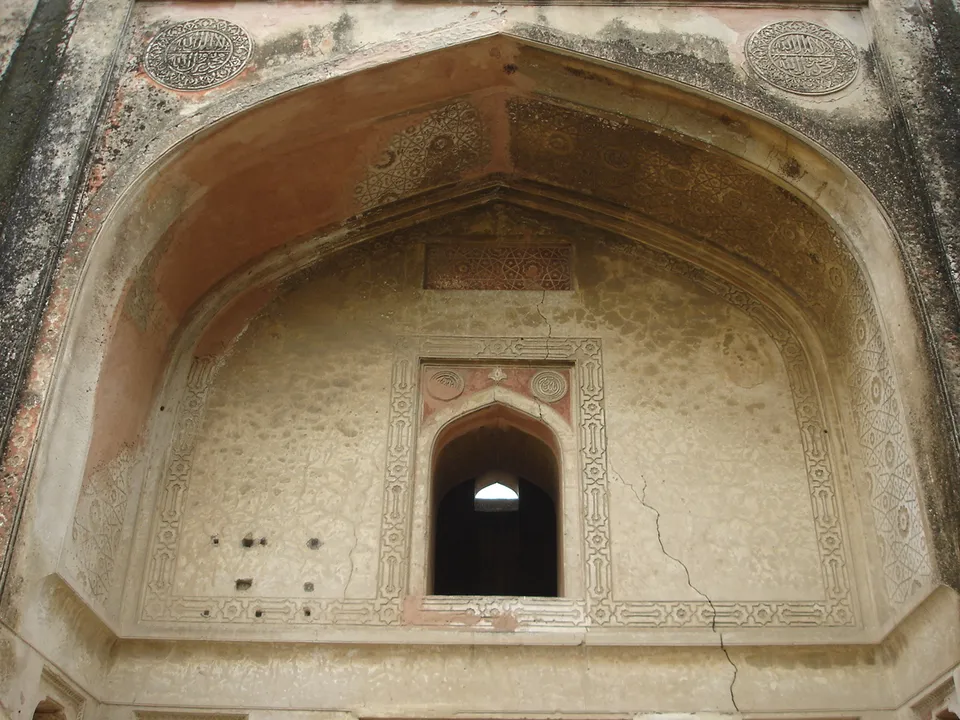
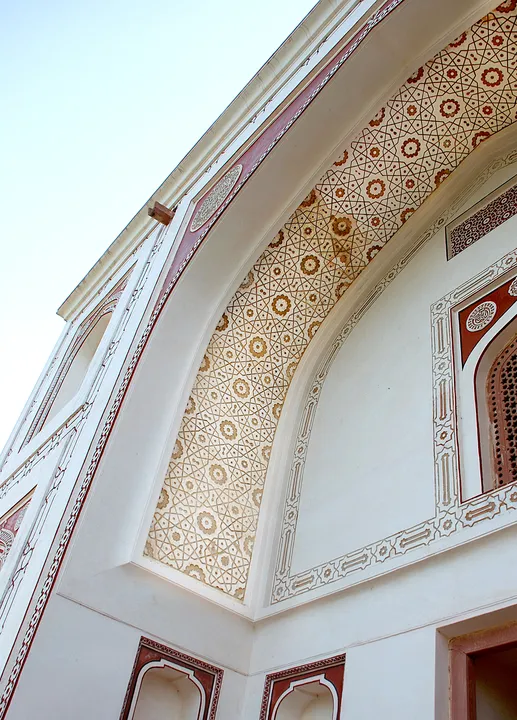
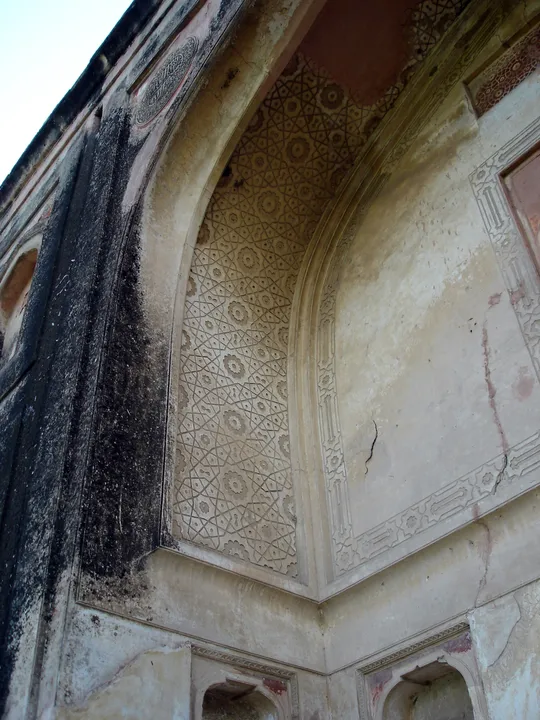
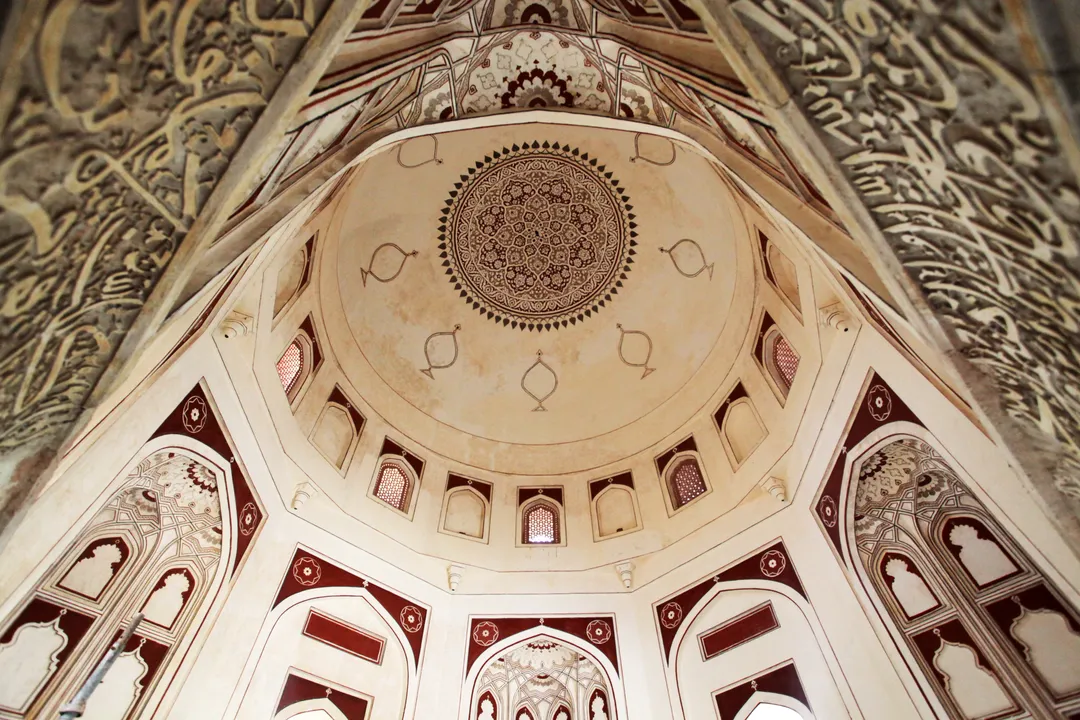
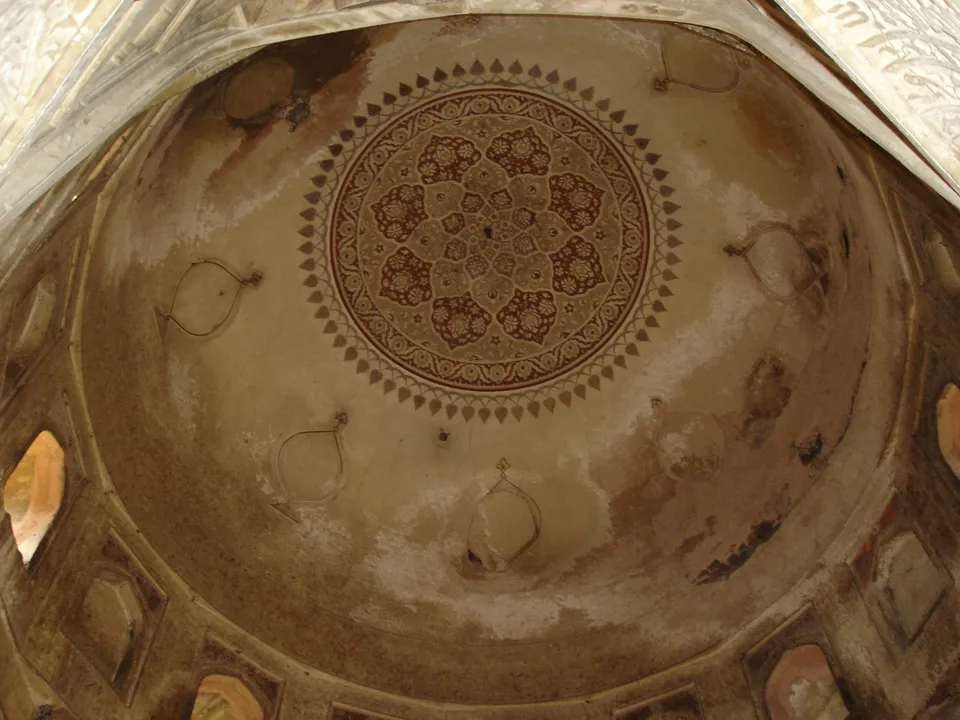
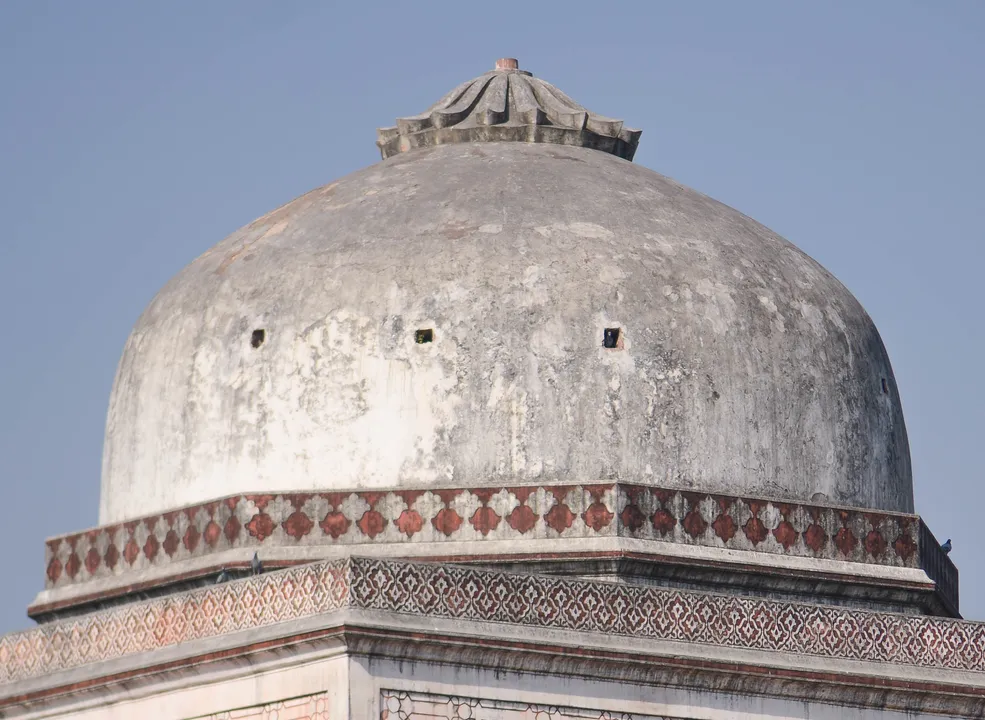
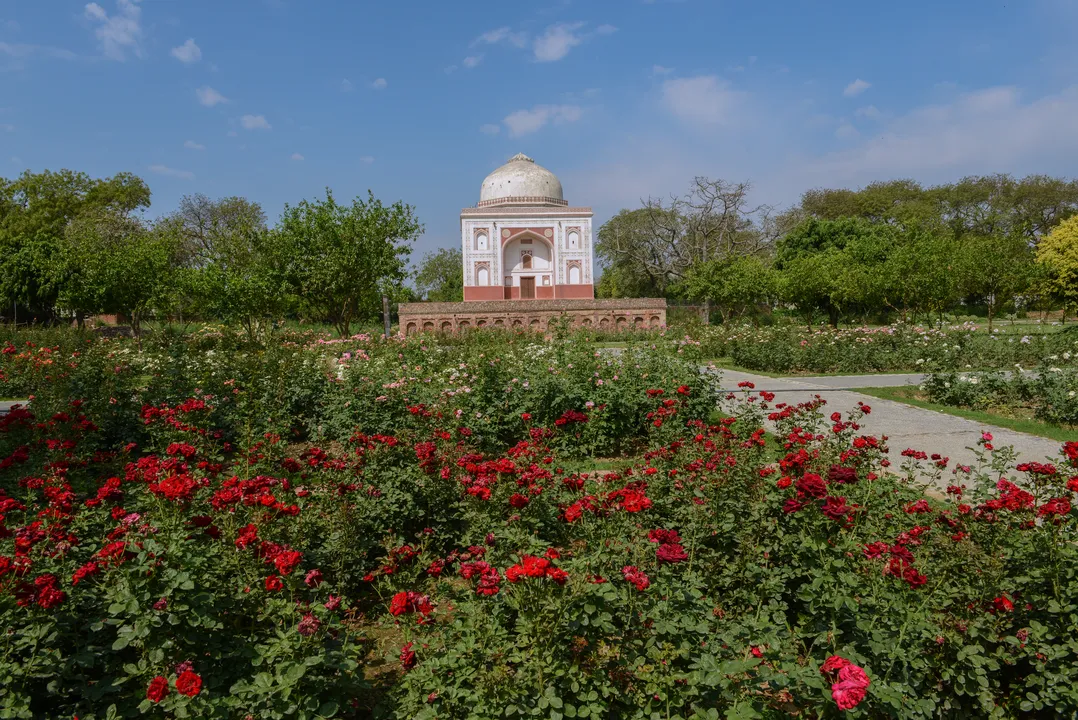
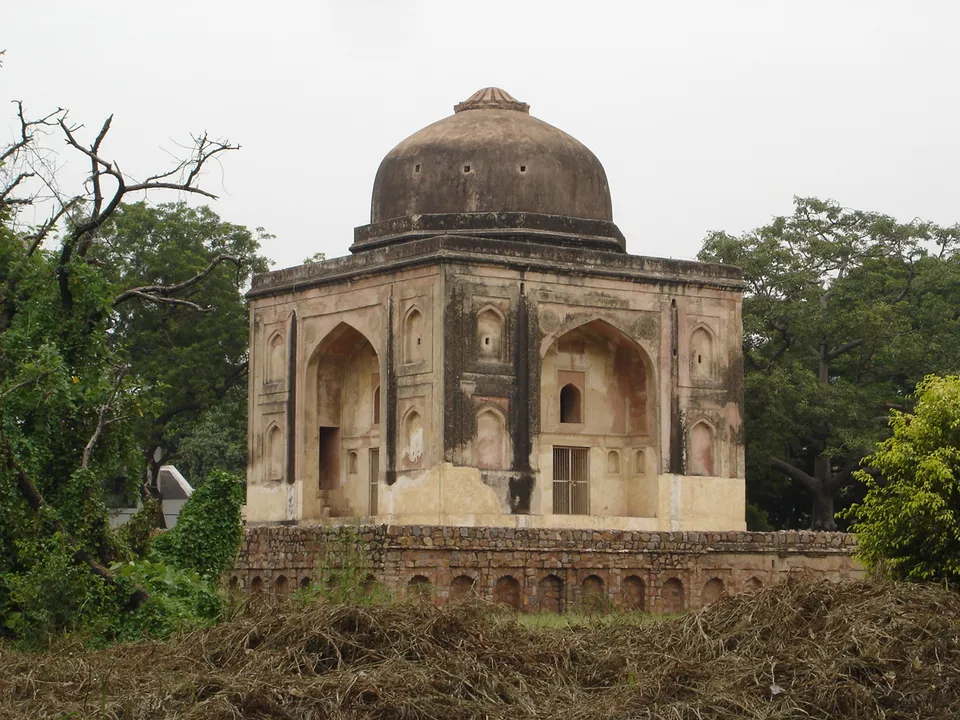
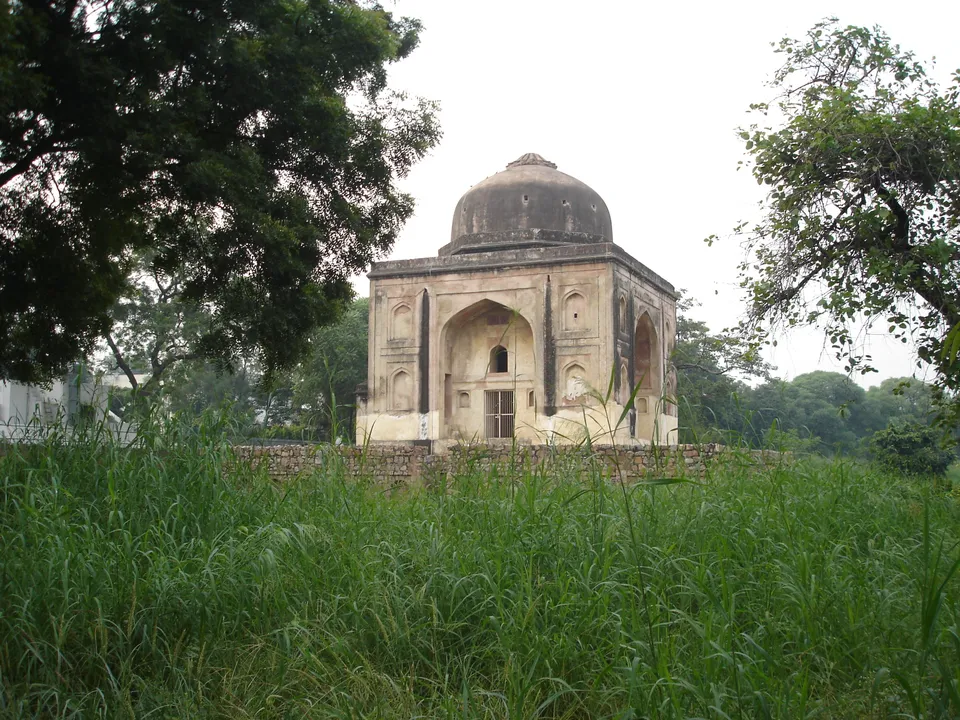
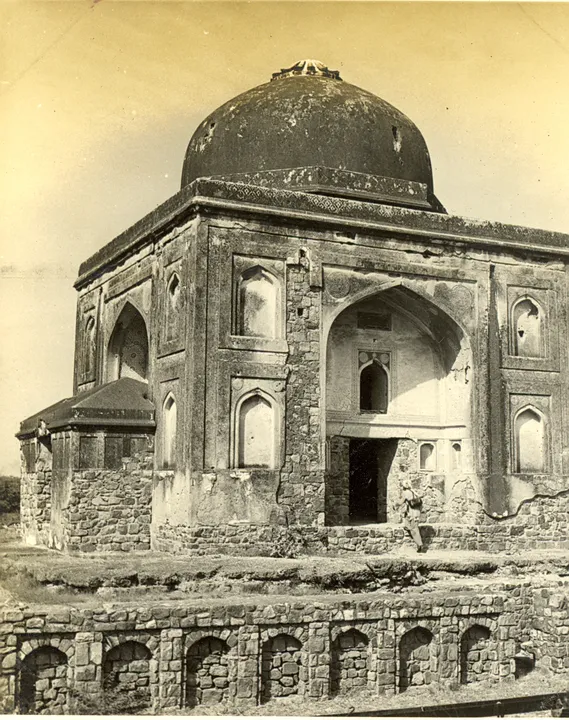
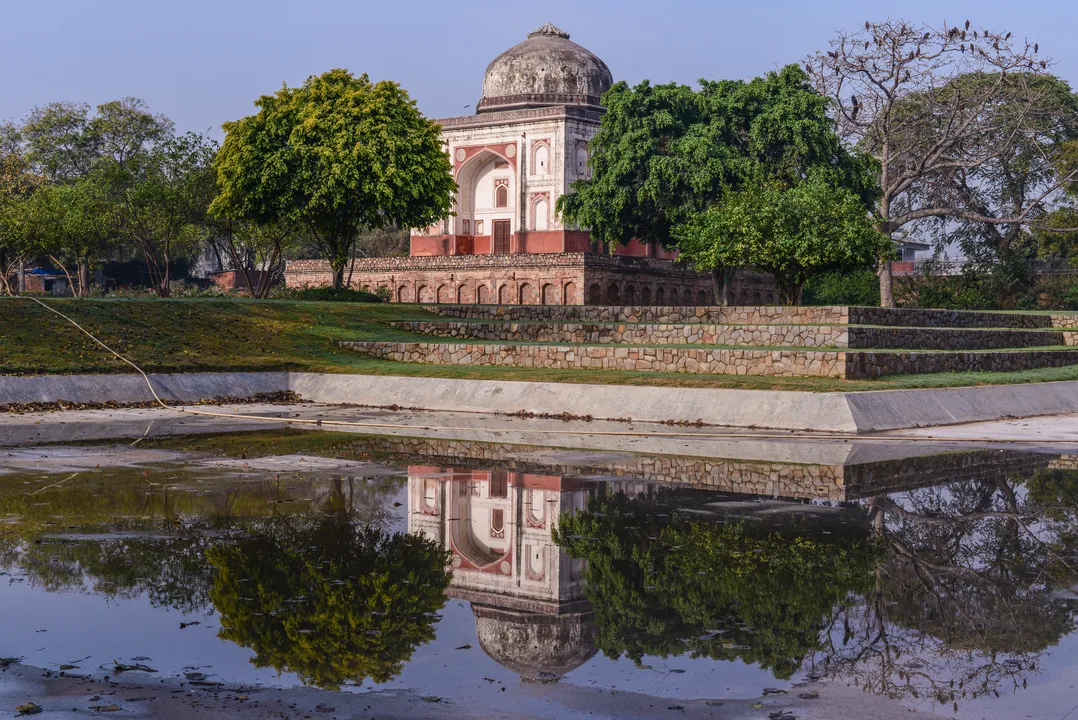
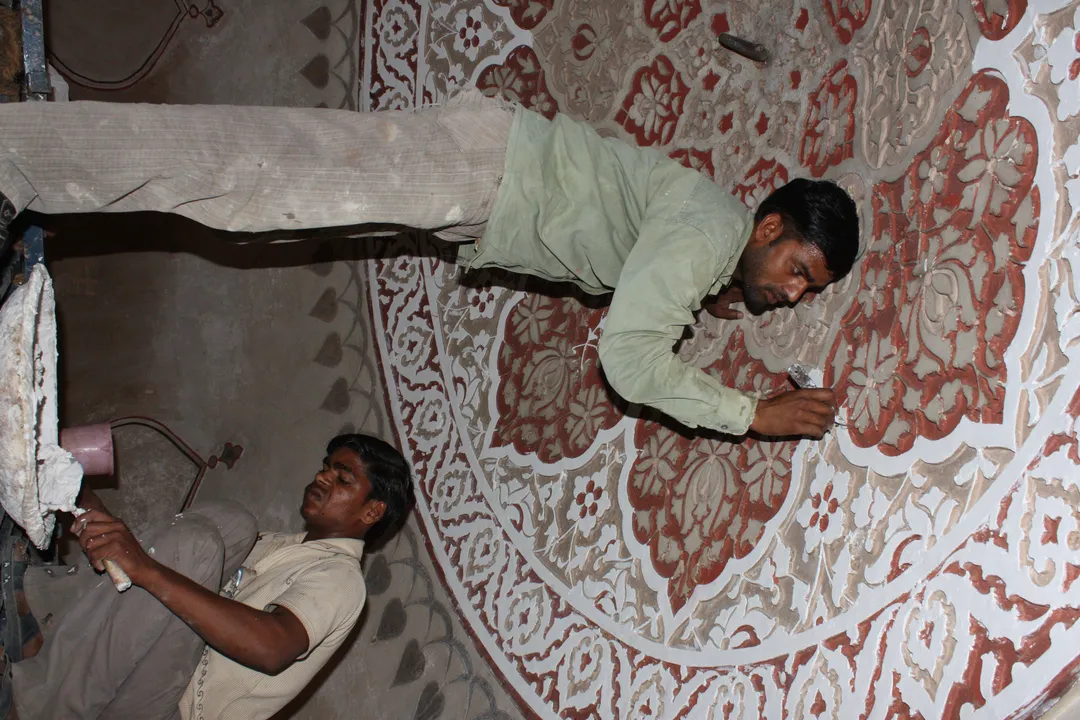
Lakkarwala Burj required years of painstaking conservation to restore missing elements such as the
geometric
incised plaster patterns and the parapet kanguras. The monument, with arched openings in each of its
four
sides, has heavily ornamented interiors with Quranic verses in incised plasterwork encircling the
room.
Conservation works on this nationally protected monument included repair and rebuilding the western
façade,
restoring the decorative plasterwork in the muqarnas and ornamentation. The lattice screens had to
be
reinstalled, and the flooring, both internal and external, needed to be rebuilt.
The ornamentation on the internal wall surfaces was cleaned to expose the original details, and the
missing incised plasterwork was reconstructed following the original pattern. Lakkarwala Burj, like
Sundar
Burj, has Quranic inscriptions, which too were restored in a matching style of calligraphy.
After a year of working on the ceiling and internal walls, work on the façade began in late 2011.
The
decorative edging of the arched openings was restored, and the upper plinth was paved in red
sandstone.
Paving has been laid in a generous slope for effective drainage to ensure minimum damage to the
structure.
The entire stone floor surface has been hand dressed by craftsmen.
After its conservation, Lakkarwala Burj became a part of the Humayun’s Tomb World Heritage site in
2015.
Garden:
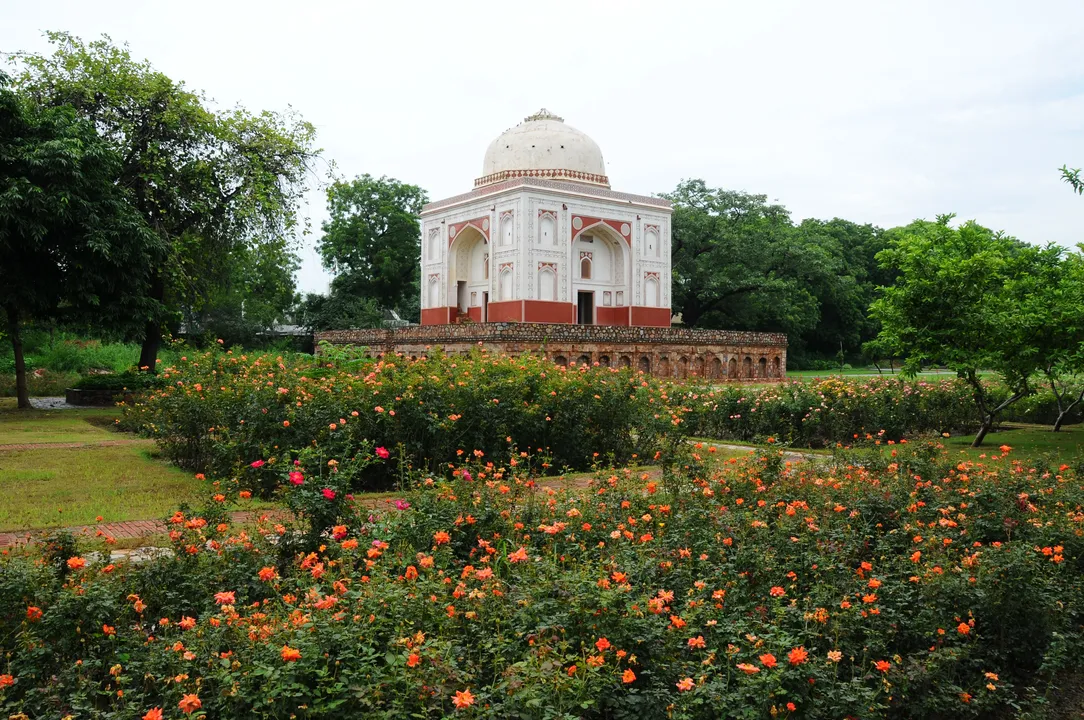
To the east of Lakkarwala Burj, along the access from the Central Vista, a rose garden was created
in
2010, with the rose plants transplanted here from the vehicular roundabout around the Sunder Burj.
The
landscape plan ensured no damage was caused to any underlying archaeology discovered during
clearance
works.
The rose garden, comprising 31 rectangular beds and 19 rose varieties, has a neatly laid out Delhi
quartzite and brick-tile paving. Inset tiles with geometric designs were made out of Dholpur stone
to
highlight pathway intersections. Grass lawns were also extended beyond the rose garden to the
excavated
lake, giving the area a serene surrounding. Eight Ficus benjamina (weeping fig) plants from
the
Central
Axis were carefully transplanted to the southern edge of the Lakkarwala Rose Garden and are
flourishing
here.
.webp)
.webp)
.webp)
.webp)
.webp)
.webp)
.webp.nu)
.webp.nu)
.webp)
.webp.nu)
.webp.nu)
.webp)
.webp)
.webp)
.webp)
.webp)
.webp)
.webp)
.webp)
.webp)
.webp)
.webp)