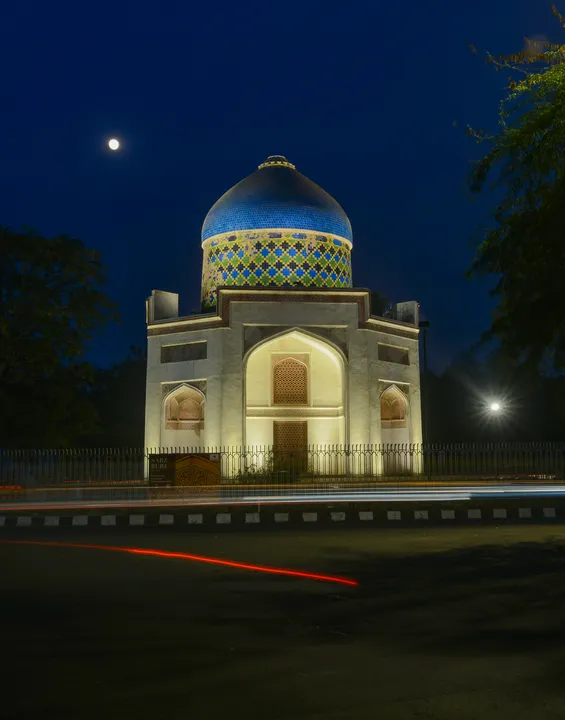
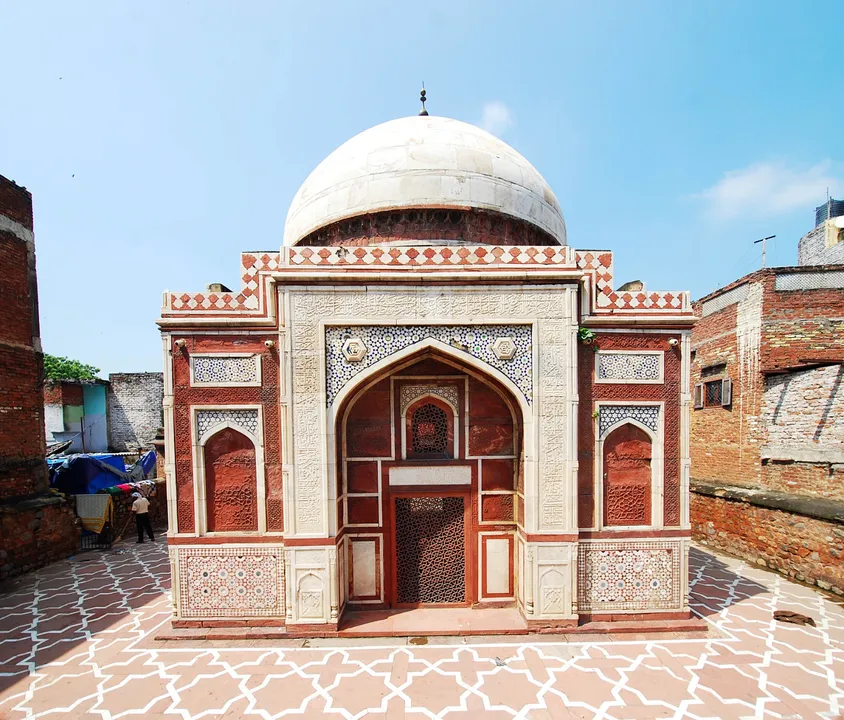
Isa Khan’s Mosque is over 25 m wide and 10 m deep and is mostly built of well-dressed local quartzite
stone.
As is usual for Mosques, the central bay is grander, finished with red sandstone, ornamented with
arched niches that surround the arched opening.
This central bay is also roofed by a large dome that springs from an octagonal drum, interiors of
which are in dressed DQ stone.
The exteriors of the octagonal drum would have originally had sandstone minarets on the eight corners
– only the base of which now remains, and in the centre of each side is a sandstone arched niche.
Red Sandstone is also used for the battlemented kangura motifs on the parapet.
On either side of the principal dome stands octagonal canopies, unique in Delhi for a Mosque roof.
The canopies were originally covered with ceramic tiles, with the domes being in green tiles and blue
and yellow tiles alternating at the bottom band had suffered damage and have now been conserved as
per the original designs and material.
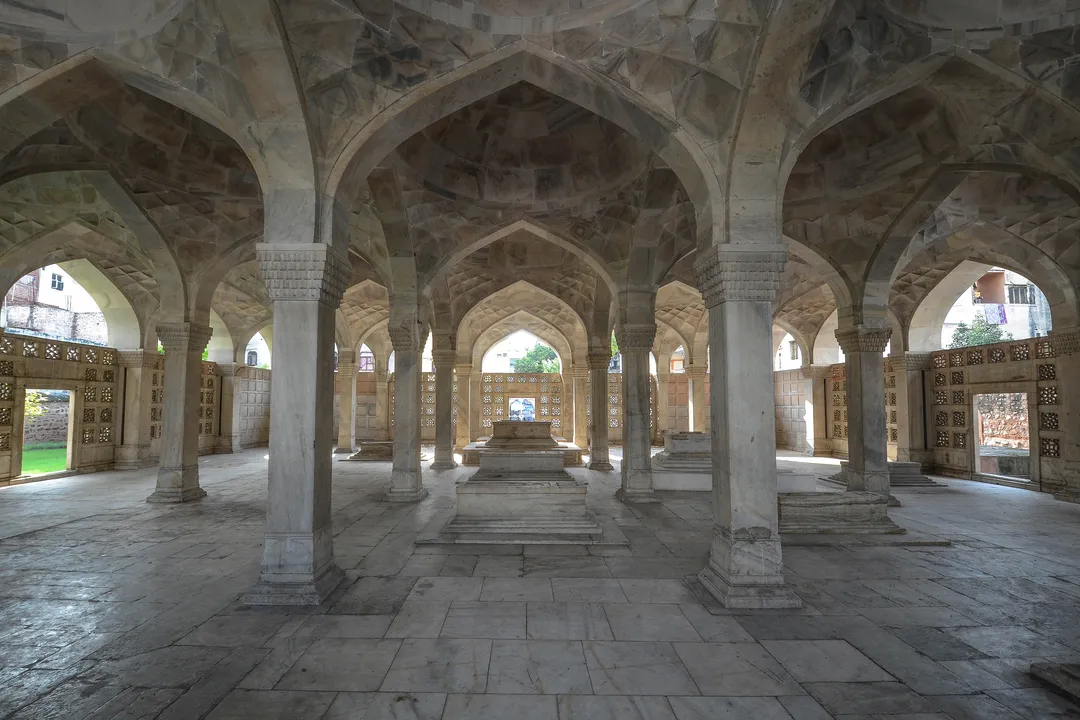
In the interiors, each of the three bays has a decorative sandstone mihrab with carving and incised
Quranic quotations set in a plain square architrave and capped by a row of small kanguras, the side
mihrabs being treated in the same way, but less ornately’, with the remainder of the interior being
principally of dressed DQ stone.
The roof was originally accessible from three staircases - one on the southern edge of the main
façade and one each from the northern and southern ends of the interiors.
The inner southern staircase was blocked in the early 20th century – possibly as part of a
conservation effort.
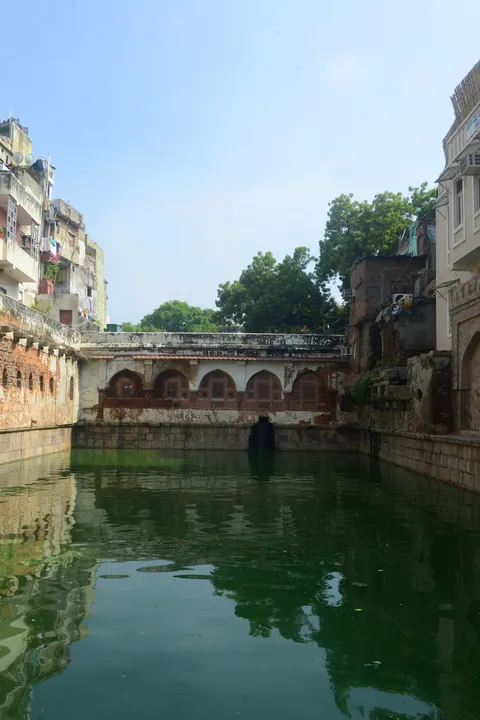
The Mosque has a large platform facing it with a small circular well adjacent to the southeast corner
of the building.
As part of the conservation efforts undertaken here, the well was desilted and now serves as a water
recharge well.


.webp)