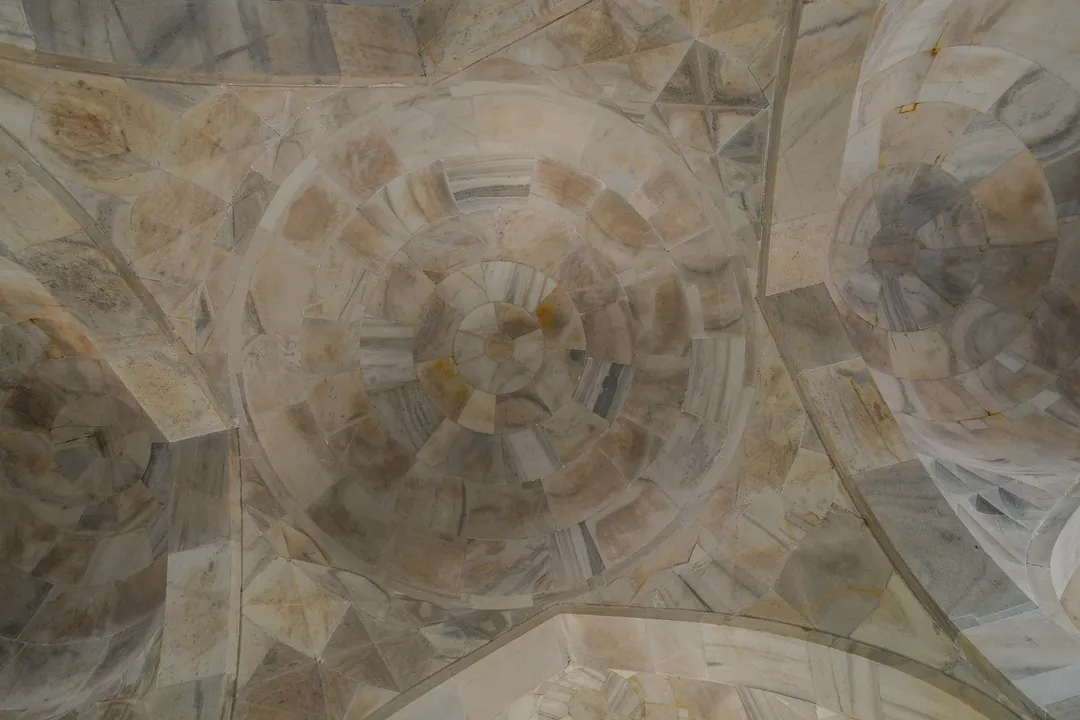
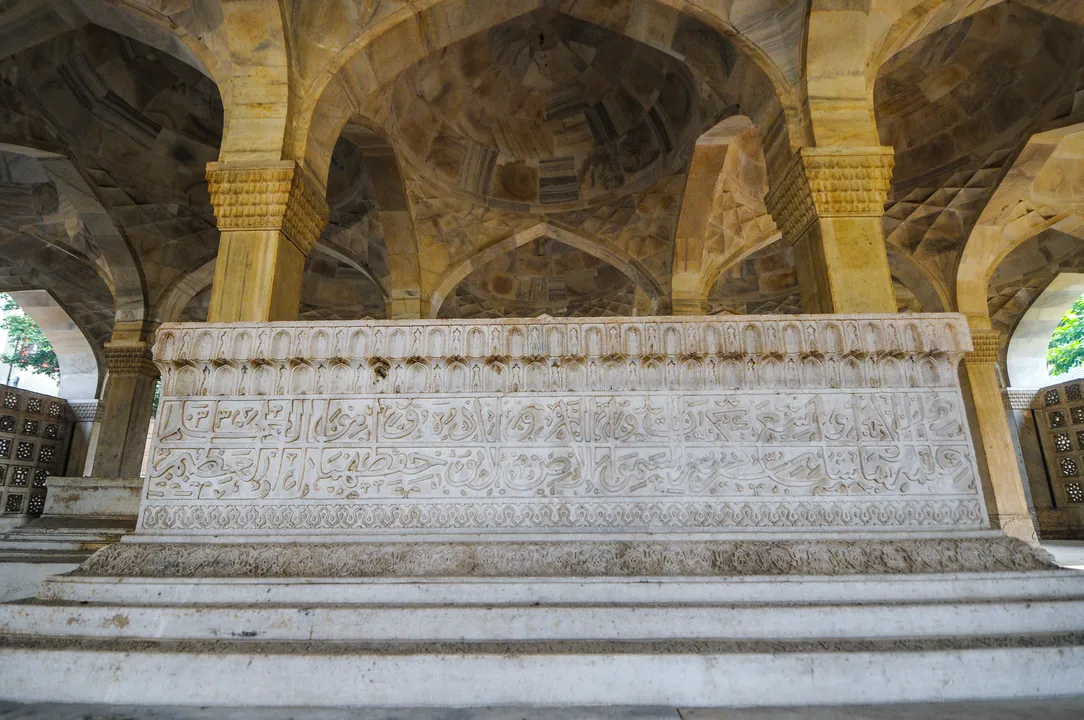
Repairs commenced in 2011 and each dome required complete dismantling of the marble blocks followed
by
repairs to marble and masonry prior to restoring blocks to their original position.
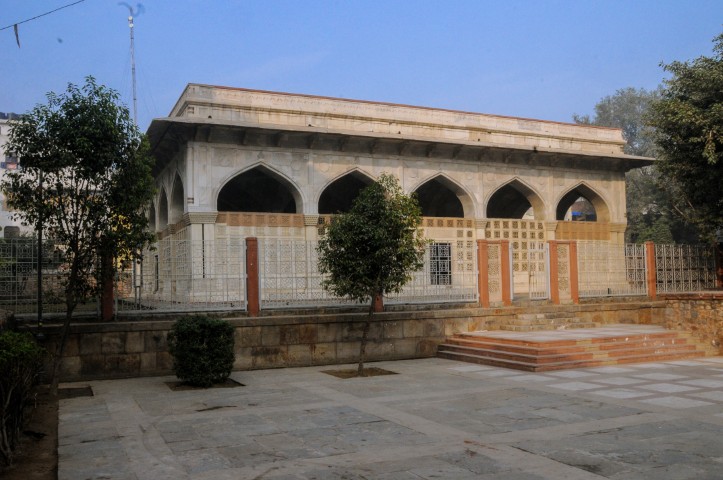
The conservation of CHAUNSATH Khambha was undertaken by the Aga Khan Trust for
Culture (AKTC) in
partnership with the Archaeological Survey of India, and with co-funding of Federal Republic of
Germany,
New Delhi.
DOCUMENTATION:
Archival research was carried out to achieve better understanding of the historic fabric of the
building and its relationship with one of oldest precinct in Delhi.
The study of the structure revealed that over 80% of the stone blocks had severe cracks and past
repairs had inappropriately only filled up burst portions of stone blocks with white cement –
masking the
damage but allowing the deterioration to accelerate.
A high-definition survey, using 3D laser scanning technology, was carried out on
the structure as a precursor to conservation works. This was followed with a stone-by-stone
assessment of the entire structure to map the profile and defects on each individual stone coupled
with photo
and video documentation.
To complete a structural analysis pits were dug to study the foundations – which were
surprisingly found to reach a depth greater than five metres.
In view of the unique architectural design, construction techniques of the CHAUNSATH Khamba as well
as the fact that each stone itself was unique in shape and size, it was agreed that all original
stone
was required to be retained. However, steps needed to be taken to replace iron dowels with
non-corrosive
stainless-steel dowels of matching size.
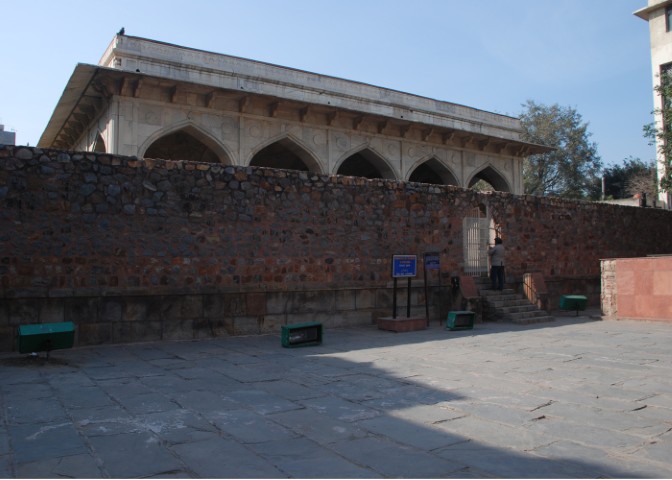
The forecourt – largest open space in Hazrat Nizamuddin Basti – was also landscaped to create a
performance venue for the Qawwali musicians residing in the historic neighbourhood.
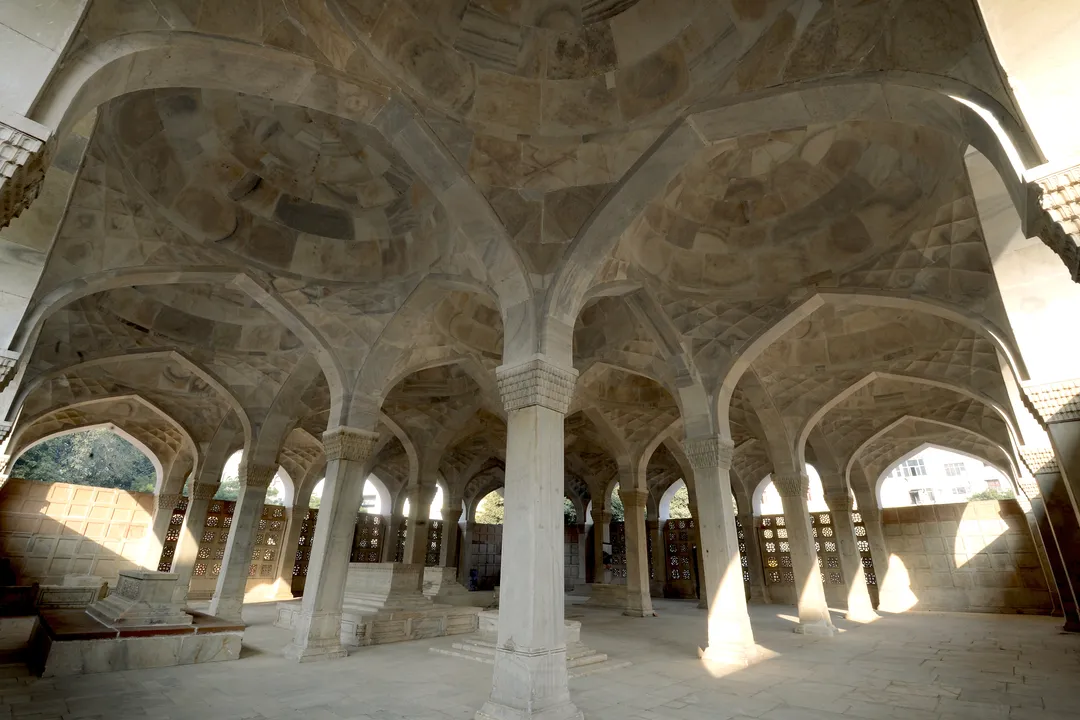
The preservation of CHAUNSATH Khamba was possible only if the iron dowels could be removed and thus
it was necessary to commence a conservation programme that required dismantling each of the 25
domes.
Such an effort had never before been undertaken anywhere in the world.
The multi-disciplinary conservation team comprising experienced engineers, craftsmen and
conservation architects could only access the iron dowels from below as the documentation had
revealed over 1m
thick masonry above the marble domes. Each stone was thus required to be numbered and mapped.
Once a specially designed support framework was built, the keystone was held in place and rings of
marble blocks were dismantled and carefully reassembled on the floor. Iron dowels manually removed
and stone indents of matching size prepared for corners which had burst.
TERRACE:
The masonry above the domes had 1 metre deep and 4 inches wide cracks through which the water was
seeping inside the building. These cracks were required to be repaired urgently to stop further
deterioration.
The 230 mm thick layer of cement concrete from the roof was removed without disturbing the
underneath structure and pressure grouting was done to repair the network of cracks in the roof
which were
approximately 2 meters in depth. A new layer of lime concrete with additives like Jaggery and Bael
fruit pulp (Belgiri) was laid maintaining the original slope levels. Clogged waterspouts were opened
to
prevent rainwater from stagnating.
DOME:
The repair of the 25 domes has taken almost four years during which time three
teams of stone craftsmen have worked under close supervision. The repairs
to the domes has been coupled with repairs to the 350 mm thick arch stones
and the diamond shaped pendentives – several of which were severely damaged
and displaced - creating a major threat to the structure as these pendentives and
arches support the marble domes.
After removing the white cement from the broken joints, tell tails were fixed over the joints for
structural monitoring for further observation by trained conservation architect and engineers. Each
stone weighs from 200 to 350 kilograms and requires 4 to 5 persons to remove and stack the
stone.
The stones being structural stones and are interlocked with each other. Proper precision needs to
follow while removing the stone without damaging the stone.
Shifting of stones from the scaffolding has to be done with great care with the help of rope and
requires 4–5 persons without damaging the edges of the stone. The corroded iron dowels are then
removed carefully without damaging the stone and then replaced with stainless steel dowels. The
process was
constantly supervised by conservation architect and site engineer.
FAÇADE:
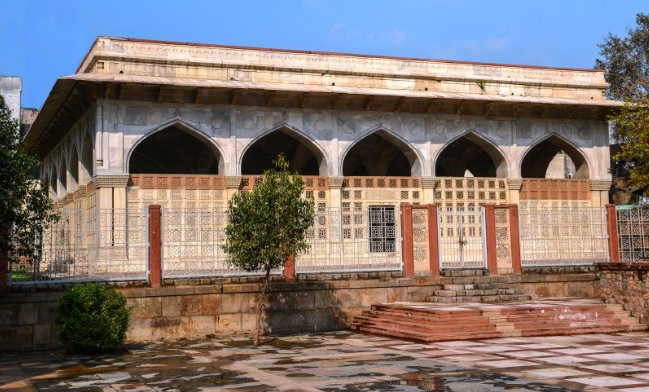
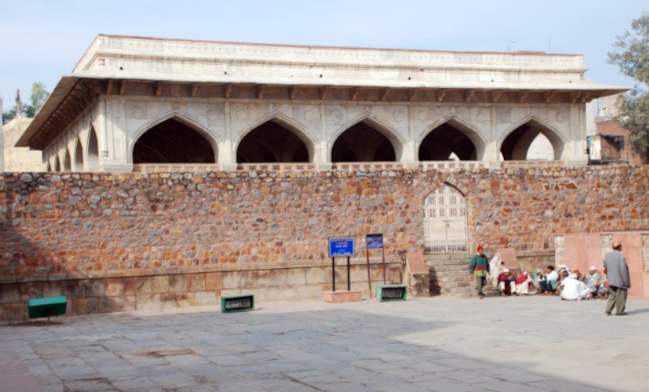
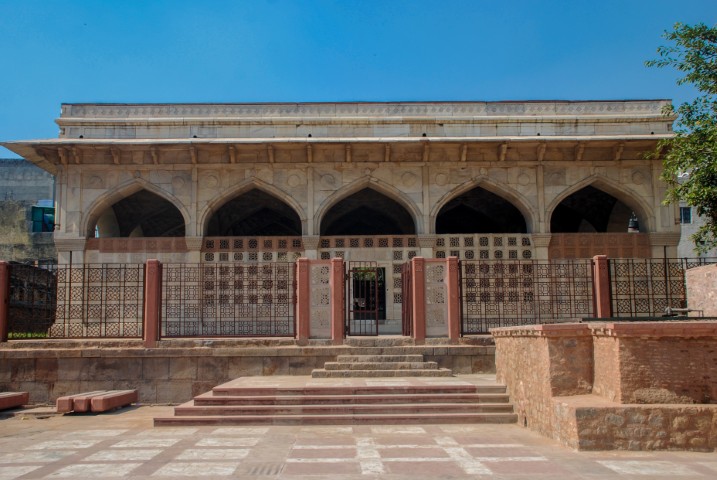
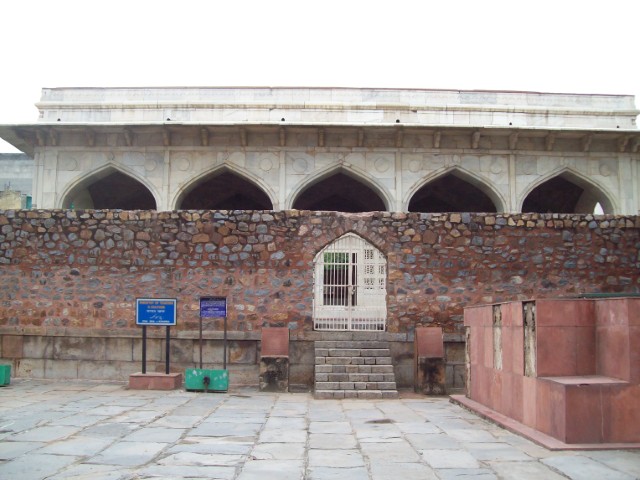
Conservation works on the facade of the structure needed to similarly repair
damaged stones, though this did not require complete dismantling.
.jpg)
.jpg)
.jpg)
.jpg)
.jpg)
.JPG)
-(Small).jpg)
-(Small).jpg)
-(Small).jpg)
.JPG)
-(Small).JPG)
.JPG)
.JPG)
.JPG)
.JPG)
.JPG)
.JPG)
.JPG)